DESTINATION JOURNAL · CROATIA
Private Tours in Split, Croatia: A Local Guide to Choosing Your Day
The best private tours in Split, Croatia begin with a simple question: what would make this day feel well spent to you? For one traveller, it is understanding how a Roman emperor’s residence became a living city. For another, it is walking through those same streets with stops for local food. A family may prefer a shorter introduction and an ice cream afterwards, while friends travelling together might choose Split and Trogir followed by a vineyard lunch above the Adriatic. These are different days, and the right choice matters more than fitting every attraction into one programme.
Split is particularly rewarding with a private local guide because its history is woven into everyday life. Ancient walls stand beside homes, shops and cafés; a passage that looks like a shortcut can reveal an important part of the palace’s original plan. You do not need to spend the whole visit listening to dates. A good tour helps you recognise what is in front of you, leaves room for questions and introduces the city at a pace that suits your party.
This guide explains the main private tour options, how a walking route can unfold and when it makes sense to add Trogir, food, wine or a day outside the city. It also covers the less glamorous details that often determine how enjoyable the experience will be: meeting points, walking surfaces, admission tickets, summer heat and cruise schedules.
Start by choosing the kind of Split experience you want
A private walking tour is the natural starting point for a first visit. It gives you the framework of the old centre and helps the rest of your stay make sense. Choose this if you want to recognise the palace gates, understand the Peristyle and find your bearings among the streets and squares. The walk can be the main activity of a relaxed day rather than the first item in an exhausting checklist.
A food-focused experience approaches the city through both history and the table. It suits travellers who enjoy asking what people eat, how local dishes developed and how food fits into daily life. It should still have a coherent walking route; a sequence of tastings is more satisfying when the places between them are part of the story. Tell us about allergies and preferences before booking so the proposed stops can be assessed properly.
A combined Split and Trogir tour adds a second historic town and a road journey. A vineyard tasting or chef-prepared meal can provide a distinctive finish, but it changes the length and rhythm of the day. Travellers who principally want swimming or scenery should also compare a boat outing or national park excursion rather than adding those ambitions to an already full city programme.
What “private” means on a Split tour
Your guide is reserved for your party, so the conversation and pace can respond to the people travelling. You can explain that Roman history is your priority, that one person needs frequent seated breaks or that the children engage better with short stories than long explanations. The agreed route provides the structure, while the guide makes the experience personal within the time available.
Private does not mean that the city or its monuments are closed to other visitors. The Peristyle, waterfront and public streets remain shared places. Admission rules, opening hours and security arrangements still apply to paid attractions. Nor does booking a private guide automatically include every entrance ticket or provide a right to bypass queues. Read the individual product’s inclusions and ask about any interior that is especially important to you.
The distinction between a standard private product and a customised day is useful. A published walking tour has an advertised duration and scope. A requested change involving a vehicle, different pickup, additional monument or longer meal may require a revised arrangement. Agreeing those details beforehand protects the quality of the day and makes the final price easier to understand.
Meeting your private guide in Split
You will meet your private guide at the confirmed meeting point in Split, then begin with an introduction to the city and the route ahead. A clear meeting point is more useful than a vague promise to meet “near the palace.” Keep the confirmation available on your phone and allow time to reach the location, especially if you are arriving by taxi or from accommodation outside the pedestrian centre.
If you are coming from a cruise ship, tell us the ship’s name, date, scheduled arrival and all-aboard time. Do not assume that a city-centre meeting point is the same as collection at the terminal. A shore excursion may require different meeting instructions and additional travel time. Guests staying in a hotel should likewise distinguish a meeting near the old centre from a vehicle pickup at their property.
At the beginning, mention anything that has changed since booking. A tired child, a recent injury or a particular interest can influence the walk. A private guide can often adjust the emphasis, but essential access requirements should be discussed in advance rather than left until everyone is standing at the first flight of steps.
Diocletian’s Palace: understand the place before collecting sights
Diocletian’s Palace is not a single museum with one entrance and a prescribed circuit. Its surviving structures form part of Split’s historic centre. That is why a guided walk is valuable: it explains the relationship between the ancient residence, later buildings and the city you see today. The palace and Split’s historical complex are recognised on UNESCO’s World Heritage List.
A useful introduction establishes the palace’s broad layout, then connects particular spaces to their original functions. You can begin to understand why a gate faces in a certain direction, why some levels feel enclosed and how the waterfront relates to the former imperial apartments. The experience becomes more interesting when those relationships are visible, rather than presented as a list of isolated monuments.
Your route may pass through several palace spaces without entering every paid interior. Discuss the cellars, cathedral or other particular sites when choosing the product. If you want a deeper architectural visit, say so. If you prefer an accessible first encounter with the city’s history, a focused route can be more rewarding than trying to investigate every surviving structure in detail.
The Peristyle and Vestibule: two very different moments
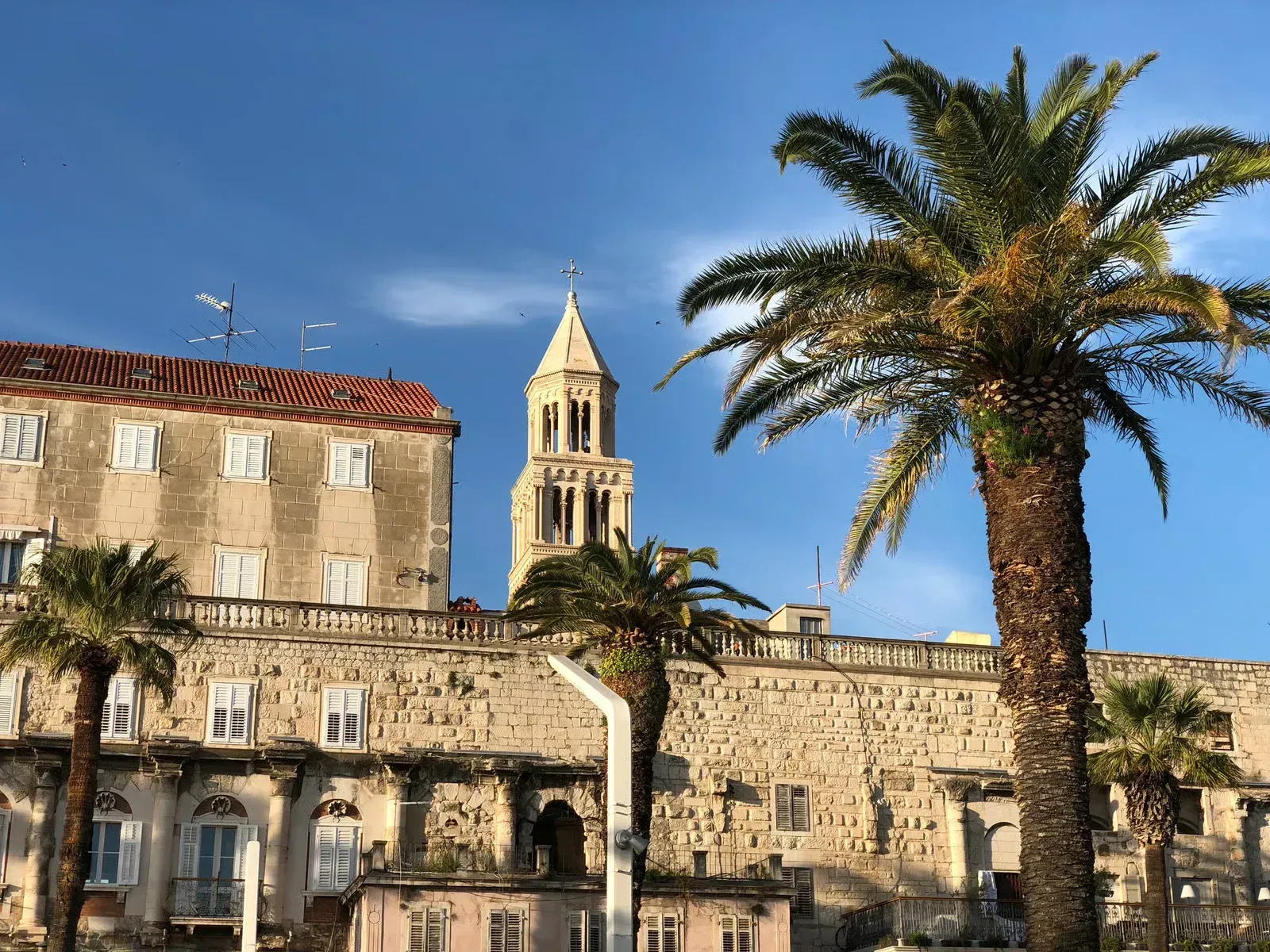
The Peristyle provides one of the clearest places to pause and understand the palace’s ceremonial character. Columns, steps and surrounding façades create a setting that still feels theatrical. A private guide can draw attention to a few details, explain how the space changed over time and help you see beyond the immediate impulse to take a photograph and move on.
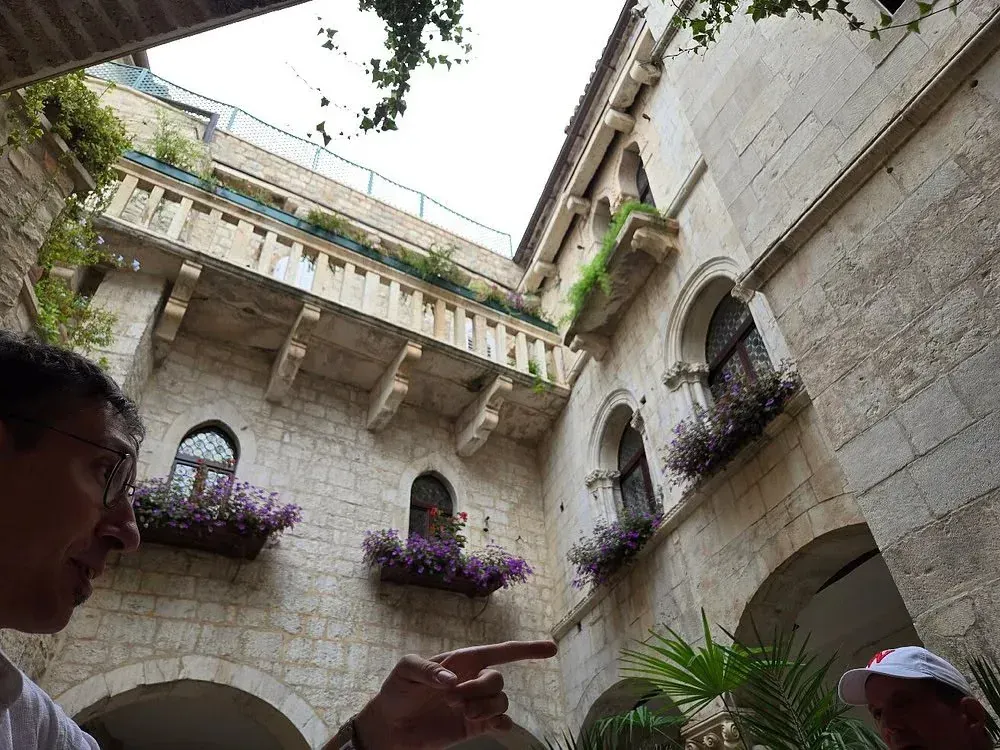
The nearby Vestibule offers another perspective on the approach to the former residential quarters. Looking upwards and noticing the shape of the space can make the architecture memorable even for visitors who do not normally seek out ancient history. These are good places for a guide to invite questions and connect the scale of the palace with the people who once used it.
They are also popular public spaces. Their atmosphere changes with visitor numbers, events and the time of day. We would not promise that they will be empty, or that a particular performance will take place during your visit. The value of a private walk lies in interpretation and sensible pacing, not in pretending that a busy historic city can be made exclusive.
The palace cellars: decide whether to include the paid areas
The palace substructures help explain the scale and arrangement of the former rooms above. Split’s tourist board distinguishes the central passage, used as a connection between the waterfront and Peristyle, from the areas visited for sightseeing. That distinction matters when comparing tour descriptions: passing through the palace’s lower level is not necessarily the same as a full visit to the paid halls.
If the cellars are a priority, check that the chosen itinerary includes the intended visit and establish how admission is handled. Do not assume that every tour mentioning Diocletian’s Palace covers the same interiors. The time required for a visit also affects what can comfortably be included afterwards, particularly on a shorter walk or when children are travelling.
Inside spaces can provide a welcome change of atmosphere, but they should not be treated as a guaranteed solution to every weather or access concern. Ask about the exact route, steps and any requirements that matter to your party. The aim is to choose the right version of the experience, rather than discover during the tour that a key expectation was never part of the booking.
Pjaca, the Fruit Square and the city beyond the emperor
Split’s story does not end with the Roman palace. A well-designed walk also reveals the later city, including Pjaca and the Fruit Square, where different periods of architecture and civic life can be understood together. These spaces help visitors see Split as a place that continued to develop, rather than a monument that stopped changing after antiquity.
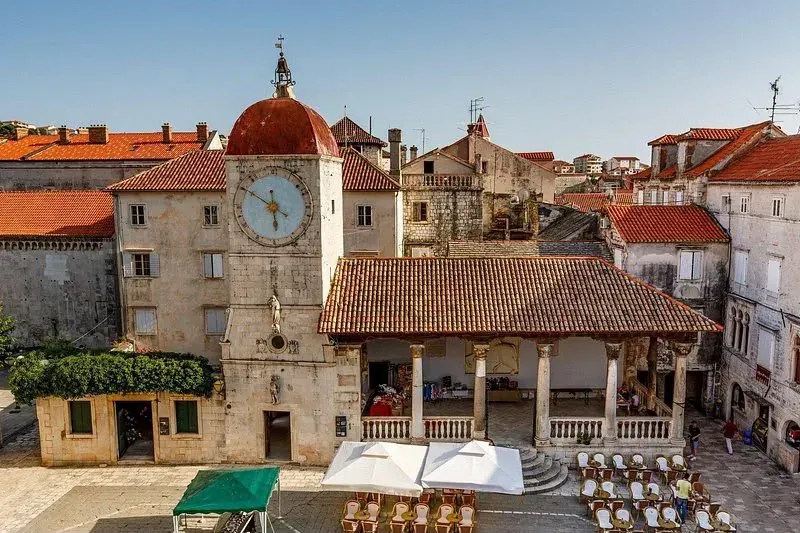
Your guide can connect streets and squares through stories of trade, local habits and the way people use the centre today. This is often where the conversation becomes especially personal. You might ask about a building detail, a familiar ingredient on a menu or how the city feels outside the main visitor season. Those questions give the walk a direction that a recorded commentary cannot anticipate.
Leave room to notice ordinary life. A café terrace, a shopfront or a small architectural fragment may become as memorable as the major sights. A private tour should give you a way into the city, not leave you feeling that you have completed a set of compulsory stops without really seeing the spaces between them.
The Riva and the choice of a panoramic extension
The waterfront offers a natural change of pace after the tighter streets of the old centre. It gives the walk a broader view of Split’s relationship with the sea and can be a convenient place to finish, depending on the agreed itinerary. It is also useful for deciding how to spend the hours after your guide leaves: a meal, an independent wander or simply time to sit.
Some tours add a hill viewpoint. Choose that option for the panorama, rather than assuming that it is a minor extension suitable for everyone. A climb can feel quite different in warm weather or after several hours on foot. Travellers who prefer less walking should ask for a route centred on the lower historic streets and a seated break.
A viewpoint is not essential to understanding Split. If your priority is the palace, local food or a comfortable introduction, there is no reason to add a climb simply because it appears on a list of highlights. The best private route reflects your energy and interests, including the choice to leave something for another visit.
A private Split food tour: history with something to taste
Food can provide a vivid introduction to the city when it is treated as part of the local story. A private food experience allows you to ask about ingredients, everyday eating and regional differences while moving through the centre with your guide. It can work well for travellers who prefer a conversational visit to a predominantly architectural one.
Look at the actual tastings and meal format before booking. A tour with local bites and wine is not automatically the same as a seafood lunch, and a tasting should not be described as a full meal unless the product confirms that. Our individual tour pages explain the proposed experience so you can select the day that suits your appetite as well as your interests.
Let us know about allergies, dietary restrictions and anyone who will not drink alcohol. Alternatives depend on the specific stops and should be agreed in advance. For families, it is useful to discuss children’s preferences without assuming that every child wants a simplified version of an adult wine-and-food itinerary. The right choice can make the experience enjoyable for everyone at the table.
Split and Trogir: a second UNESCO town with its own character
Trogir is a separate historic town, reached by road from Split. A combined private tour should give both places enough space to feel distinct. In Split, the focus begins with an imperial residence absorbed into a living city; in Trogir, the compact historic core invites a different kind of walk among stone streets, civic spaces and religious architecture.
The drive between them also passes through the coastal setting of Kaštela. It is part of the day’s geography, not a reason to promise a stop in every settlement. A thoughtful combined route balances interpretation, travel and free time. If you want to visit a particular paid monument in Trogir, establish whether it belongs in the programme before confirming the tour.
Choose this combination if you enjoy heritage and want to see beyond Split without committing the entire day to a distant excursion. If you have only a short morning, a deeper Split walk may be better. Two town names on an itinerary are not automatically more valuable than one place explored with attention.
A vineyard above the coast: tasting or a chef-prepared lunch
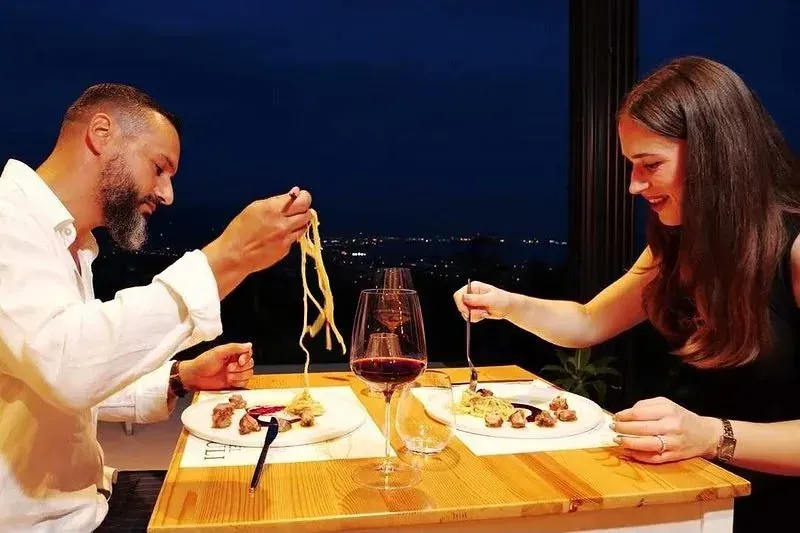
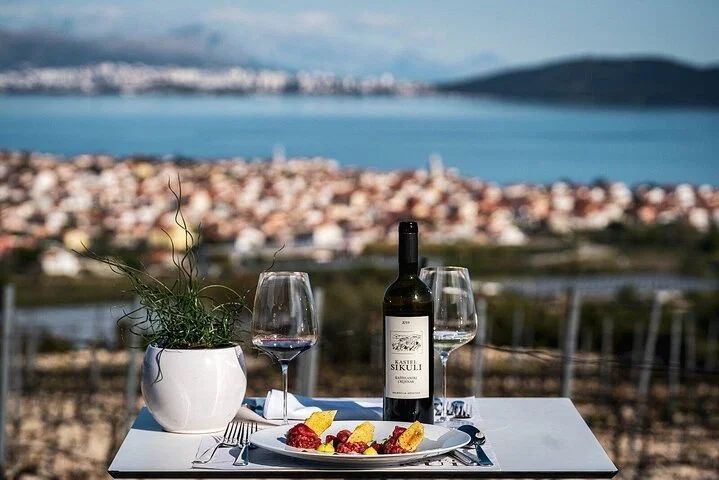
The vineyard experience above the Split region offers a distinctive contrast to the stone streets. The attraction is the setting as much as the tasting: vines, a hilltop position and views towards the Adriatic create a strong sense of place. It is a particularly appealing finish for guests who want heritage and regional flavours in the same day.
Compare a wine tasting with a chef-prepared three-course meal. They require different amounts of time and produce a different rhythm. A relaxed lunch should not be squeezed into the last few minutes before a deadline. If the meal is central to your plans, let the walking visits serve that larger shape rather than treating the table as an afterthought.
The public description need not reveal the winery’s name to explain why the experience is special. What matters when booking is the confirmed format, what is included, dietary arrangements and the balance of the day. A private guide through Split or Trogir and a hosted vineyard experience are complementary roles, not necessarily one person delivering every element.
Krka from Split: choose a nature day rather than an extra stop
A private excursion to Krka changes the focus from city streets to the river landscape. It is a separate outing requiring road travel and time in the park. The experience can be paired with regional wine, prosciutto and cheese when that combination is part of the chosen product, but it should still allow time to enjoy the walk beside the water.
Admission to Krka is separate on our relevant day-tour products, so check the current ticket arrangements and the chosen date. Do not plan a swim at Skradinski buk: the park’s rules do not permit that. Photographs and older travel accounts sometimes give the wrong impression, which is why current official guidance matters more than an attractive image.
Think about walking surfaces and the return journey, not just the waterfall photograph. A private vehicle does not remove the walking required inside the park. If your day ends with a cruise departure, ferry or flight, tell us before booking so the excursion’s suitability can be considered against the real deadline.
A sea day from Split: another decision entirely
Private boat tours from Split can lead towards the Blue Lagoon, Hvar and the Pakleni Islands, or longer routes towards Vis and Biševo’s Blue Cave. These are not interchangeable outings. Distance, time on the water, weather and the balance between swimming and sightseeing should drive the decision, especially for families or travellers who are unsure about speedboats.
A shorter route can be a better fit than the most ambitious itinerary. If you mainly want clear water, a swim and a relaxed day with your companions, a nearer destination may serve you better than spending much of the day crossing open water. If the Blue Cave is the particular reason for your outing, understand that access is affected by conditions and local operation.
Read our separate guide to private boat tours in Split before choosing. The crew’s role, boat layout, shade, boarding and actual inclusions deserve as much attention as the destination names. A walking tour and a sea day can complement each other across a stay; they do not need to be compressed into one overcrowded programme.
Families, couples and different walking preferences
For families, begin with ages and attention spans. A shorter private walk can make history engaging without requiring children to remain interested in every architectural detail. Give the guide a sense of what the children enjoy, and allow time for questions and breaks. Do not assume that the longest tour offers the best value for a younger party.
For couples, choose the kind of shared experience you actually enjoy. Some want an in-depth palace introduction; others would rather combine a gentler walk with local food or a vineyard meal. An anniversary or honeymoon does not automatically require a sunset cruise, and an ordinary holiday can still deserve a very special afternoon.
Travellers who prefer less walking should describe practical needs clearly. Tell us how long you comfortably walk, whether steps are difficult and whether seated pauses are important. Historic paving and pedestrian areas remain part of Split. A tailored route can reduce effort, but it should never be presented as fully step-free without checking the exact arrangements.
Timing, heat and the rest of your day
In warmer months, the time of your walk affects comfort. An earlier or later start may suit your plans better than the middle of the day, subject to guide availability and the opening hours of any interiors. Bring water, sun protection and footwear that is comfortable on historic paving. A private tour is personal, but it is still an outdoor experience.
Plan the surrounding hours realistically. A late flight arrival followed by an ambitious sightseeing schedule can feel demanding. A long lunch before a walking tour may change the pace you want. If you are combining the tour with a hotel check-in, luggage or an airport transfer, those services need their own confirmed arrangements rather than assumptions based on the city’s compact appearance.
Allow free time after the guided visit where possible. One of the benefits of a good introduction is knowing what you would like to revisit independently. You may want to return to a square, enter another monument or simply follow a street that caught your attention. A private tour can open the city to you without occupying every hour of your stay.
How to compare prices and inclusions fairly
Compare the whole experience, not just the first number. Check the duration, party size, whether transport is included, the guide’s role, tastings or meals and admission arrangements. A per-person price based on two guests is not the same as a total for a larger family. Live availability and the selected number of participants determine the booking quote.
Some tours have higher minimum participant numbers. The booking calendar should be used with the actual party size rather than treating the lowest displayed example as universally available. If your requested arrangement differs from the published product, ask for a specific proposal. The useful question is what the final confirmed price covers for your party on your date.
Before payment, review the cancellation conditions and meeting instructions on the chosen tour. If something essential is unclear, ask while there is time to choose another format. Transparent planning is part of a comfortable private experience: you should begin the day knowing what you have booked, where it starts and what remains a personal choice.
Frequently asked questions
Is a private walking tour enough for a first visit to Split?
It is an excellent introduction when your aim is to understand the palace and historic centre. Choose a deeper architectural visit, a food experience or a combined Split–Trogir day if those interests deserve more time. Leave space afterwards to enjoy the city independently.
Can the tour start at our cruise ship?
Cruise collection must be confirmed for the individual booking. Send the ship, date and port times. Do not assume that a standard city meeting point includes terminal pickup or that the scheduled arrival time is the moment you will be ready to leave the ship.
Are the palace cellars and other tickets included?
Check the specific tour’s inclusions. Mentioning the palace does not automatically mean admission to every paid interior. Tell us which places matter to you so the route, timing and ticket arrangements can be matched to that request.
Can we include both Trogir and a vineyard meal?
Yes, an appropriate combined product can bring those elements together. Choose between a tasting and a longer meal format, disclose dietary requirements and allow a sensible amount of time. The day should remain enjoyable rather than become a race between reservations.
How should we choose our private tour?
Start with your available time, interests and walking comfort, then compare the relevant products. Browse our Split collection, open the full itinerary and inclusions, and contact us if the published options do not quite match your plans. The right day begins with the right brief.